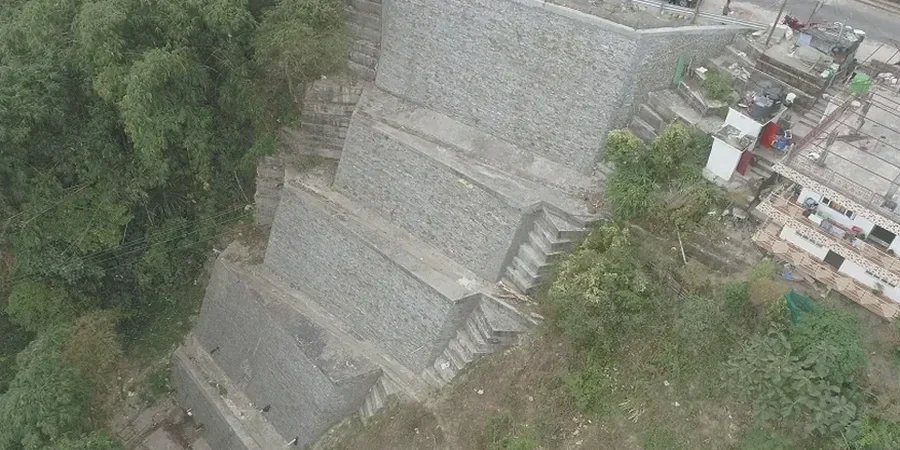
Swindon’s expansion from a railway town into a major logistics hub has placed immense pressure on its varied topography. The sharp transition from the flat, alluvial plains of the Thames headwaters to the steep Kimmeridge Clay escarpments of Old Town and Wroughton creates a uniquely challenging landscape for development. It’s a city built on a geological knife-edge. Any excavation or fill operation here demands a rigorous slope stability analysis, not as a bureaucratic formality, but as an essential safeguard against the latent instability woven into the local bedrock. We routinely see how the legacy of Victorian earthworks interacts with modern loading conditions, and the results can be unforgiving. For deeper investigations into the underlying strata before benching a slope, we often integrate targeted test pits to calibrate our geotechnical model with direct observations of the weathered zone.
In Swindon’s over-consolidated clays, a slope that has stood for a century can fail in a single wet winter when the pore pressure equalises for the first time.