GEOTECHNICAL ENGINEERING1
SWINDON
HomeLaboratoryAtterberg limits

Atterberg Limits Testing in Swindon: Clay Classification You Can Trust

Practical geotechnics, field-tested.

LEARN MORE

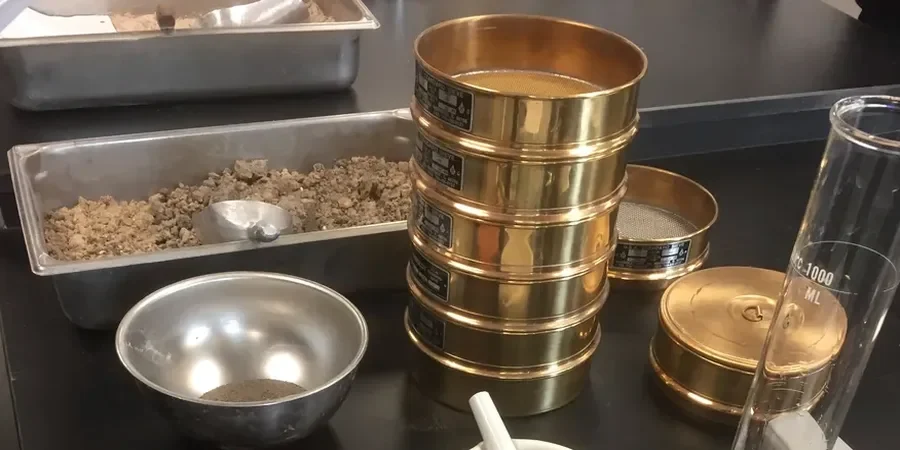
The cone penetrometer sits on the lab bench at a precise 30-degree angle, its 80-gram mass ready to drop into a brass cup of remoulded soil. That’s the Casagrande apparatus—the standard kit for determining liquid limit under BS 5930. In Swindon, where the Jurassic and Cretaceous clay formations shift from the Kimmeridge deposits north of the M4 to the Gault clays around Old Town, this simple mechanical test reveals more about site risk than a dozen borehole logs without classification. We run the full Atterberg suite—liquid limit, plastic limit, and the derived plasticity index—on every disturbed sample we collect across the borough. The numbers tell us how your soil will behave when it gets wet, how much it’ll shrink in summer, and whether your earthworks spec needs a lime stabilisation clause before the first excavator bucket hits the ground.

The plasticity index is the single best predictor of swell-shrink behaviour in Swindon’s Gault and Kimmeridge clays.
Our service areas

Process and scope

The clay beneath Swindon isn’t uniform—and projects on opposite sides of town feel the difference quickly. Over in Stratton St Margaret, we routinely encounter low-plasticity silty clays with liquid limits hovering around 35–40%. They’re workable, predictable, and compact well at optimum moisture. Move south to the hillside developments near Wichelstowe, and the profile changes: the Gault Formation delivers fat clays with plasticity indices pushing past 30%. That’s a completely different material in the compaction specification. When the PI exceeds about 25%, you’re nearly always looking at modified Proctor requirements and extended curing times. This is where we connect the Atterberg results directly to the plate load test programme—because a high-PI clay that meets density in the lab can still creep and heave under a shallow footing if moisture content isn’t locked in during construction. We’ve seen the pattern repeat on industrial units near South Marston and residential plots in Lawn: the soil classification dictates the method specification. Skip it, and you’re guessing with a six-figure earthworks budget.
Atterberg Limits Testing in Swindon: Clay Classification You Can Trust
Technical reference — Swindon

Local considerations

The most expensive mistake we see in Swindon isn’t a foundation failure on day one—it’s progressive differential movement two summers after handover. A contractor takes a bulk sample, runs a quick moisture content, and calls it good. Two years later the northwest corner of a light industrial unit in Blagrove has dropped 40 millimetres and the roller shutter doors won’t seal. The clay shrank. The Atterberg tests would have flagged a high PI material and triggered either a deeper founding depth, a suspended floor with a ventilated void, or a moisture-conditioned subgrade. We’ve worked on remedial investigations where the original ground investigation report had no plasticity data at all—just particle size curves that missed the clay fraction. Swindon’s expansive clays don’t fail spectacularly; they creep, they heave, and they cost far more to fix than the price of a proper classification suite run before the slab was poured. The NHBC and local building control officers in Swindon are increasingly flagging missing plasticity data on warranty submissions—and they’re right to do so.

Need a geotechnical assessment?

Reply within 24h.

Email: contact@geotechnical-engineering1.com

Reference standards

BS 5930:2015 + A1:2020 – Code of practice for ground investigations, BS 1377-2:1990 – Classification tests (liquid limit, plastic limit), BS EN ISO 17892-12:2018 – Fall cone liquid limit method, Eurocode 7 BS EN 1997-2:2007 – Ground investigation and testing

Reference parameters

ParameterTypical value
Liquid Limit (LL)Cone penetrometer method, BS 1377-2:1990 Clause 4
Plastic Limit (PL)Thread-rolling method, 3 mm diameter criterion
Plasticity Index (PI)PI = LL – PL, dimensionless
Liquidity Index (LI)Derived from natural moisture content vs LL and PL
Sample PreparationWet sieved through 425 μm, remoulded with distilled water
Classification SystemBS 5930:2015 + A1:2020 fine soil descriptors
Typical Swindon LL Range32–68% (Gault and Kimmeridge formations)
Result FormatFactual report with A-Line plasticity chart plotted per sample

Questions and answers

How much does Atterberg limits testing cost per sample in Swindon?

A single-point Atterberg suite (liquid limit, plastic limit, plasticity index) typically runs between £60 and £70 per sample when processed within a larger ground investigation programme. The exact cost depends on the number of samples and whether we're also running natural moisture contents and particle size distributions from the same bag. Turnaround is usually 5–7 working days from sample receipt.

Which Swindon soil formations need Atterberg testing the most?

The Gault Formation clays south of the railway line and the Kimmeridge Clay deposits across north Swindon are the two formations where plasticity testing is genuinely indispensable. Both can produce high-plasticity material with PI values exceeding 30%. The Oxford Clay around the eastern fringes tends to be more silty and lower-risk, but we still recommend at least screening-level Atterbergs on any Swindon site where clay is encountered within two metres of formation level.

What's the difference between the fall cone and Casagrande cup methods for liquid limit?

We use the fall cone penetrometer method (BS EN ISO 17892-12) as our primary technique—it's more repeatable and less operator-dependent than the traditional Casagrande cup. The cone drops from a set height into a cup of remoulded soil, and we measure penetration at different moisture contents. The Casagrande cup method (BS 1377-2) is still recognised and we can run it on request, but the cone gives cleaner data for Swindon's stiff, fissured clays where the cup's blow count can be inconsistent.

How quickly can I get Atterberg results for an urgent earthworks decision?

We can turn around a set of liquid and plastic limits in 48 hours for urgent cases, though our standard reporting window is one working week. The limiting factor is the 24-hour oven drying cycle for the natural moisture content determination, which we run in parallel. If you're mid-earthworks near the M4 corridor and a weather change has saturated your fill material, call us directly—we'll prioritise the classification suite so you can make the call on whether to lime-treat or replace before the weekend shut-down.

Location and service area

We serve projects in Swindon and surrounding areas.

View larger map