GEOTECHNICAL ENGINEERING1
SWINDON
HomeLaboratoryLaboratory CBR test

Laboratory CBR Testing for Pavement Design in Swindon

Practical geotechnics, field-tested.

LEARN MORE

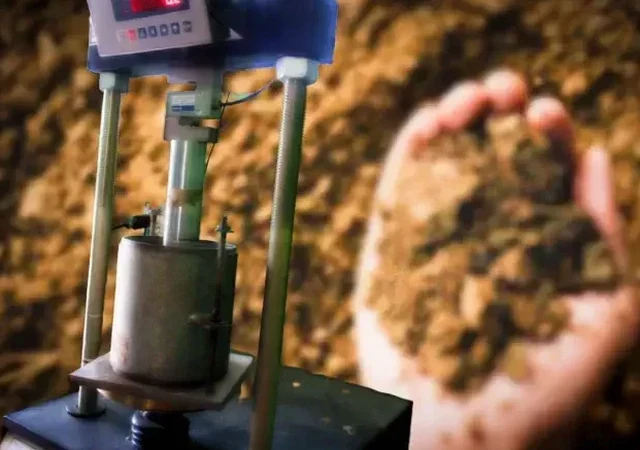
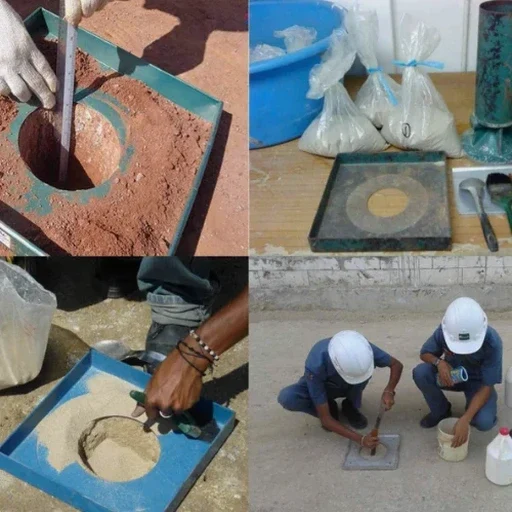
When we look at the soil profile across Swindon, from the clay-rich patches near the M4 corridor to the Upper Greensand formations around Old Town, the subgrade support varies far more than most contractors assume. A standard visual inspection cannot tell you what a test pit exposes about moisture sensitivity, but the laboratory CBR test quantifies exactly how much load the formation can carry. We see too many pavement designs relying on assumed CBR values of 5% that turn out to be under 2% once the lab results come back. Running a proper soaked CBR test under BS 5930 conditions gives the design engineer real numbers to work with, not textbook guesses. That difference alone can prevent a pavement from rutting within the first two years of service life.

A soaked CBR of 2% versus an assumed 5% can halve the design life of a flexible pavement in Swindon's clay subgrades.
Our service areas

Process and scope

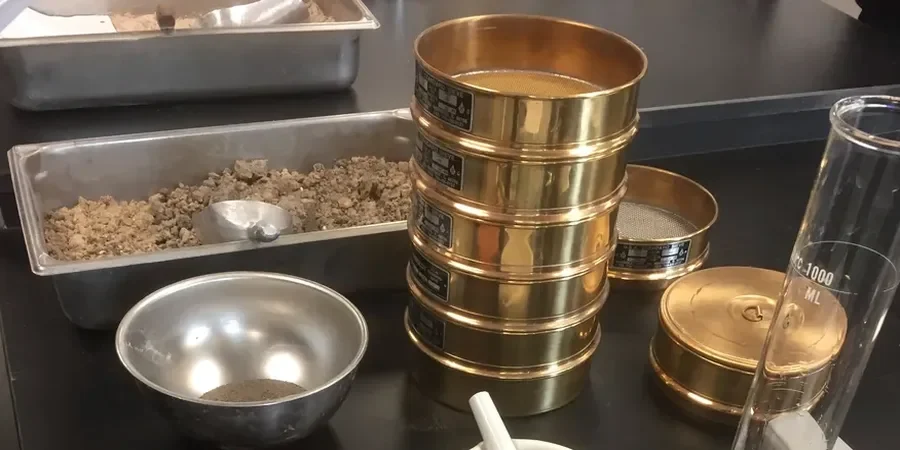
The contrast between Swindon's northern expansion areas and the more established industrial estates near South Marston highlights why one CBR value never fits all. Former agricultural land often hides a deep layer of desiccated clay with a stiff crust that crumbles when saturated, while the gravelly brash over chalk in parts of Wroughton drains well but can lose strength if fines migrate into the voids. Our laboratory CBR test procedure follows BS EN 1997-2 with a 4-day soak to simulate worst-case groundwater conditions, and we run the penetration test at a controlled rate of 1.27 mm per minute using a calibrated proving ring. For projects where the pavement structure includes a capping layer, we often recommend pairing the CBR with a grain size analysis to confirm whether the imported fill meets the Specification for Highway Works Series 600 requirements. The soaked CBR value, combined with the plasticity index from Atterberg limits, tells the full story of how the subgrade will behave under repeated axle loads.
Laboratory CBR Testing for Pavement Design in Swindon
Technical reference — Swindon

Local considerations

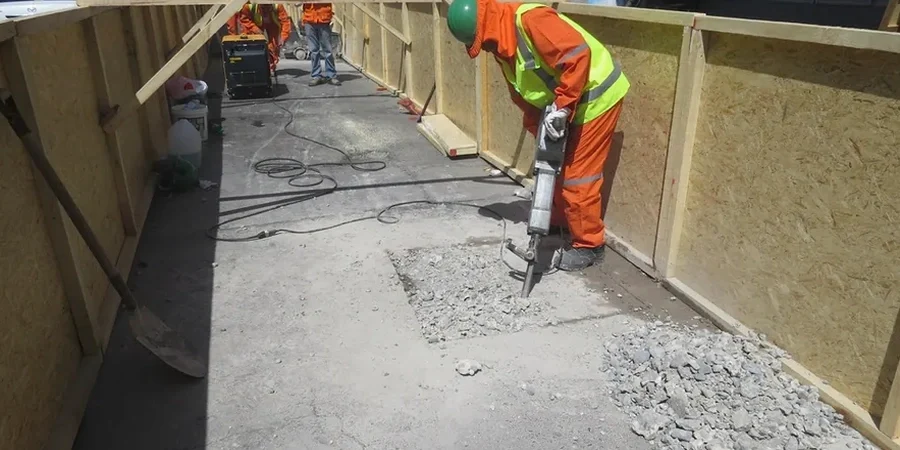
One mistake we see repeatedly on Swindon sites is the contractor skipping the soaked CBR test and relying on a quick in-situ density check, then wondering why the asphalt cracks after the first wet winter. Swindon's average annual rainfall of around 720 mm, concentrated between October and March, saturates the subgrade exactly when the pavement is under maximum thermal stress. A laboratory CBR test run on a specimen compacted at the specified density but then soaked for four days replicates that extreme condition. Without it, the designer might select a subbase thickness that works in summer but softens to a CBR below 2% in February. The result is always the same: longitudinal cracking in the wheel paths, costly patching, and a client who loses confidence in the engineering. The lab test costs a fraction of a premature overlay.

Need a geotechnical assessment?

Reply within 24h.

Email: contact@geotechnical-engineering1.com

Reference standards

BS 5930:2015 – Code of practice for ground investigations, BS EN 1997-2:2007 – Eurocode 7: Geotechnical design – Part 2: Ground investigation and testing, Specification for Highway Works (MCHW) – Series 600 Earthworks, BS 1377-4:1990 – Soils for civil engineering purposes – Part 4: Compaction-related tests

Reference parameters

ParameterTypical value
Standard followedBS 5930:2015 + BS EN 1997-2
Sample preparationCompacted to target dry density at optimum moisture content
Soaking period96 hours (4 days) under surcharge weights
Penetration rate1.27 mm/min
Surcharge massEquivalent to pavement + traffic load (min 4.5 kg annular)
Mould dimensionsCBR mould, 152 mm diameter x 127 mm height
Measurement range0–2.5 mm and 0–5.0 mm penetration

Questions and answers

How much does a laboratory CBR test cost in Swindon?

A standard soaked CBR test (three-point compaction, 4-day soak, penetration to 5 mm) typically falls between £110 and £150 per specimen. The exact cost depends on whether you need swell monitoring, additional moisture content determinations, or a companion compaction curve. We can provide a firm quote once we know the number of samples and the testing schedule.

How long does it take to get CBR results from your Swindon lab?

The soaking period alone requires 96 hours, so the absolute minimum turnaround is five working days from sample receipt. If the material needs air-drying or preparation from a bulk sample, add another day. We report results by email as soon as the penetration data is processed, and the full certified PDF follows within 24 hours.

Can you test site-won material or only imported fill?

We test both, and in Swindon we frequently handle site-won Gault Clay, Kimmeridge Clay, and Upper Greensand-derived soils. The key is taking a representative bulk sample of at least 25 kg. For imported fill, we check against the Series 600 specification and can advise whether the material is likely to meet the CBR threshold before you commit to a large order.

Location and service area

We serve projects in Swindon and surrounding areas.

View larger map