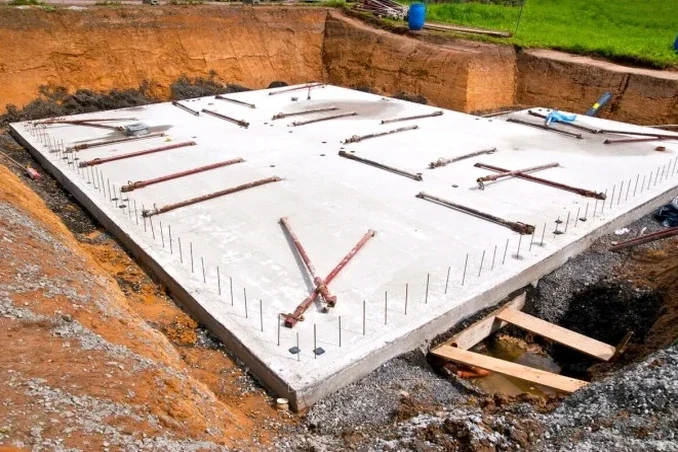
A developer we worked with near the Old Town area had a real headache. The site investigation for their three-storey apartment block on Cricklade Road revealed deep pockets of soft, reworked clay right where two heavily loaded party walls converged. Standard pad or strip footings just wouldn't cut it. The differential settlement risk was too high. We designed a stiffened raft foundation, integrating a ring beam detail that bridged the soft spots and distributed column loads evenly across the more competent strata below. This is a common scenario in Swindon, where the geology transitions abruptly between the stiff Kimmeridge Clay and less predictable drift deposits. A properly executed raft/mat foundation design isn't just a concrete slab; it is a calibrated structural element that demands a thorough understanding of ground-structure interaction. For sites where bearing capacity is marginal, combining this approach with a CPT test provides the continuous soil profile needed to refine the raft thickness and reinforcement schedule.
A well-designed raft doesn't just support a building; it actively bridges localised soft spots in the soil, turning a variable site into a uniform bearing surface.