GEOTECHNICAL ENGINEERING1
SWINDON

Geotechnical Engineering in Swindon

Practical geotechnics, field-tested.

LEARN MORE

Swindon’s expansion from a market town atop the limestone ridge into a major railway and logistics hub brought unique geotechnical challenges. The underlying geology shifts from the oolitic limestones of the Great Oolite Group to the west into the older mudstones and siltstones of the Oxford Clay Formation towards the east. Every new warehouse, data centre, or residential scheme on these reactive clays demands a precise soil mechanics study. Shrink-swell behaviour in the clay catchments can wreck shallow footings if the plasticity isn’t quantified early. Our laboratory runs the full suite of classification and strength tests so the ground model doesn’t hold surprises. For sites on the harder limestone near Old Town, a plate load test at formation level confirms the allowable bearing pressure before the blinding goes down.

Shrink-swell in Oxford Clay can exert heave pressures over 100 kPa—enough to lift a lightly loaded ground beam unless the plasticity index is factored into the design.
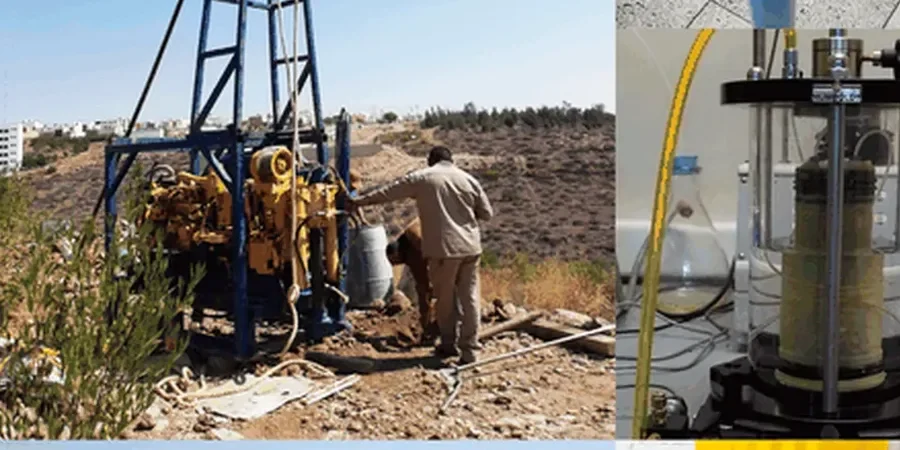
Geotechnical Engineering in Swindon
Technical reference — Swindon

Our service areas

Local geology

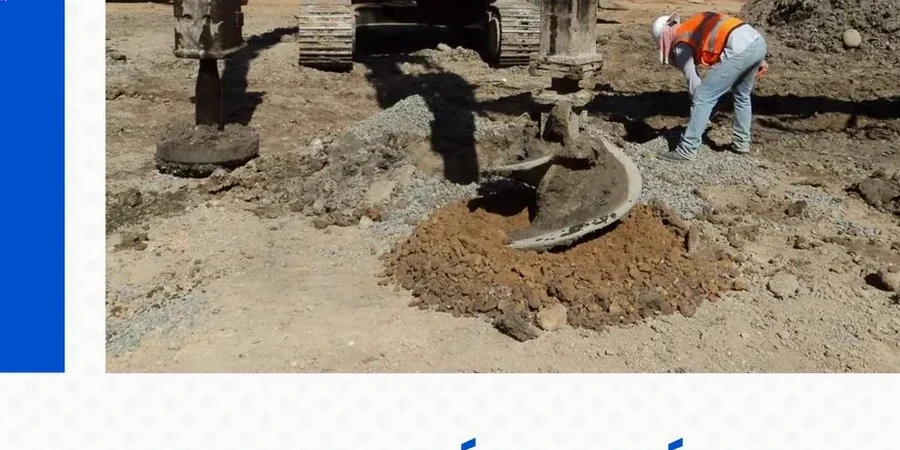
BS 5930:2020 and Eurocode 7 provide the framework, but Swindon’s patchwork geology makes generic assumptions risky. The soil mechanics study starts with intact sampling from boreholes sunk through the weathered cap into competent rock or clay. Effective stress triaxial tests with pore pressure measurement give drained and undrained parameters—critical when the water table sits just a few metres down in the drift deposits of the Ray Valley. We pair these with oedometer consolidation tests to calculate settlement magnitude and rate under the sustained loads of industrial floor slabs. Classification covers moisture content, Atterberg limits, and particle size distribution by wet sieving and sedimentation. The report pulls together a single set of design values: cohesion, friction angle, stiffness modulus, and coefficient of consolidation. No padding, just numbers the structural engineer can plug straight into their model.

Reference standards

BS 5930:2020 — Code of practice for ground investigations, BS EN 1997-1:2004 — Eurocode 7: Geotechnical design, BS 1377 — Methods of test for soils for civil engineering purposes, BRE Special Digest 1 — Concrete in aggressive ground

Need a geotechnical assessment?

Reply within 24h.

Email: contact@geotechnical-engineering1.com

Why choose us

The Gault Clay and Oxford Clay formations that underlie much of Swindon’s newer developments are among the most shrink-swell-prone soils in southern England. A dry summer followed by a wet winter can generate differential heave exceeding 40 mm across a single foundation footprint. Without a soil mechanics study quantifying the soil’s suction and swell potential, ground-floor slabs crack and services shear. In the Kimmeridge Clay outcrops south of the M4, sulphate attack on buried concrete is an additional risk—BRE Special Digest 1 class DS-3 conditions are not uncommon. We test for water-soluble sulphate and total potential sulphate on every disturbed sample so the concrete specification matches the exposure. If the site straddles the limestone–clay boundary, the bearing stratum can step abruptly, creating a differential settlement scenario that only a targeted investigation will catch.

Reference parameters

ParameterTypical value
Effective cohesion (c')0–25 kPa (weathered mudstone)
Effective friction angle (φ')22°–35° (limestone vs clay)
Undrained shear strength (cu)40–150 kPa (Oxford Clay)
Coefficient of consolidation (cv)0.5–5 m²/year (clay)
Plasticity index (PI)25–50% (high plasticity clays)
Swell pressure50–120 kPa
Sulphate class (BRE SD1)DS-1 to DS-3 (assessed per sample)

Questions and answers

How much does a soil mechanics study cost in Swindon?

For a typical residential or light commercial project in Swindon, the laboratory testing component of a soil mechanics study ranges from £2,430 to £4,430. The final figure depends on the number of boreholes, the depth of sampling, and the test schedule—classification-only packages sit at the lower end, while full triaxial and consolidation suites with chemical testing reach the upper range.

How long does the laboratory testing take once samples arrive?

Classification tests (moisture content, Atterberg, PSD) report within 5–7 working days. Consolidated triaxial tests require 10–14 working days because of the saturation and consolidation stages. Oedometer consolidation is similarly 10–12 working days per specimen. We can fast-track classification if the rig is still on site and the engineer needs immediate data to decide termination depth.

Which British Standards apply to a soil mechanics study in the UK?

The investigation follows BS 5930:2020 for sampling and logging procedures. Laboratory testing is conducted in accordance with BS 1377: Parts 2, 7, and 8. The design parameters are derived and reported within the framework of BS EN 1997-1:2004 (Eurocode 7). For sulphate and pH assessment, we reference BRE Special Digest 1 to assign the Design Sulphate Class and Aggressive Chemical Environment for Concrete (ACEC) classification.

Location and service area

We serve projects in Swindon and surrounding areas.

View larger map