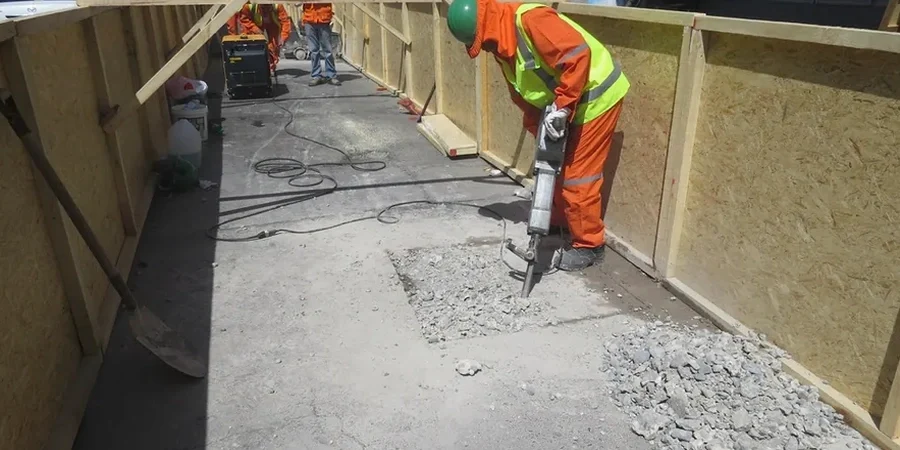
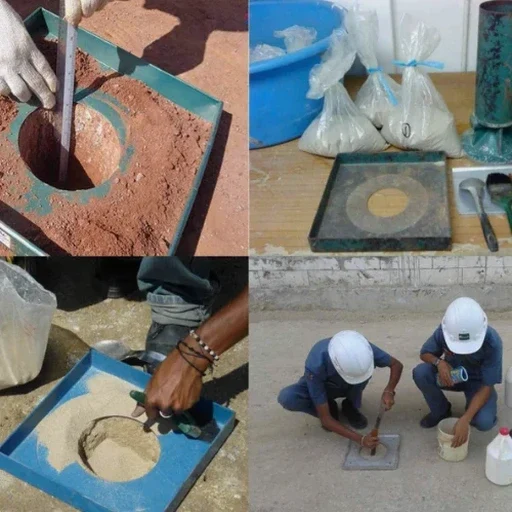
We see it regularly on projects around the Mannington and Wichelstowe developments: a contractor excavates to formation level only to find a mix of soft Kimmeridge Clay and made ground that complicates the pavement design. That's the reality of Swindon's geology, shaped by its position on the edge of the Cotswolds. The design life of a flexible pavement depends entirely on the stiffness of the subgrade beneath it, which is why our team approaches every job by first characterising the native soils. We combine site investigation with laboratory testing to define the resilient modulus and long-term deformation behaviour, moving beyond textbook assumptions. The output is a pavement layer configuration that can withstand the estimated cumulative traffic loading over 20 or 40 years, depending on the scheme requirements. For schemes near the M4 corridor, where heavy goods vehicle traffic is intense, we also evaluate the risk of subgrade rutting through staged loading simulations.
A pavement is only as durable as its weakest layer. In Swindon, that layer is almost always the subgrade, and its behaviour under repeated loading is what we quantify.