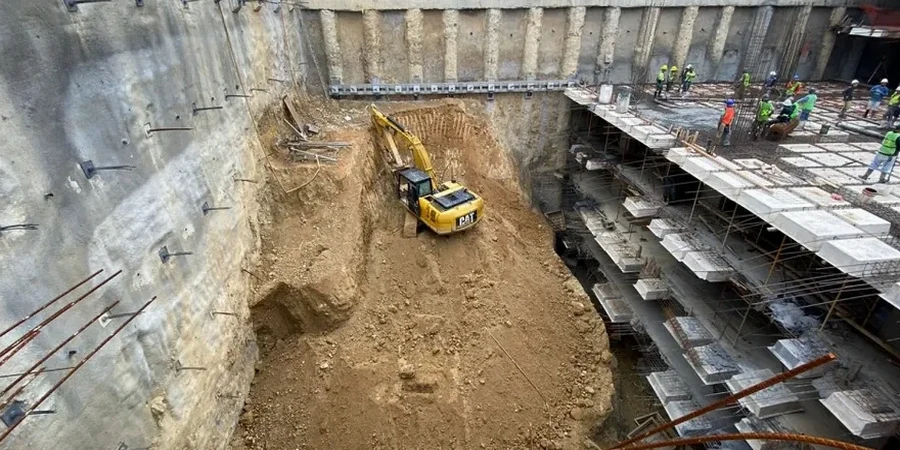
A common misstep we see across Swindon is treating a 6-metre cut in Gault Clay the same as one in the more competent Corallian beds. It simply does not work. Swindon straddles a complex geological boundary between Jurassic limestones in the north and older Oxford and Kimmeridge Clays toward the town centre and southern expansions. Groundwater in the clay can be perched, and in the limestone it moves through fissures—two completely different hydraulic regimes that demand distinct design approaches. Getting the earth pressure distribution wrong means excessive wall deflection, service strikes, or worse, a base heave failure during bulk excavation. That is why we pair site-specific parameters with construction sequence planning. When the borehole logs from a CPT test show thin sand lenses within the clay, we know immediately to check for rapid drawdown conditions around the dig.
Swindon's geology shifts abruptly from competent limestone to highly plastic clay within a single site—design assumptions must be verified every few metres.